ATM Alternatives for Small Retail Businesses
The economics of owning an ATM work well in the right environment. But they require a location that generates consistent, high-volume foot traffic—typically 150–200 transactions per month just to cover operating costs, according to ATM Marketplace's profitability analysis—plus $5,000–$15,000 in cash float inside the machine and ongoing ADA and PCI DSS compliance management.4
For stores that don't meet that transaction-volume threshold, the math rarely favors ownership. The question then becomes: how do you still serve customers who need cash? Here are five alternatives, with honest assessments of each.
1. Cashback at checkout
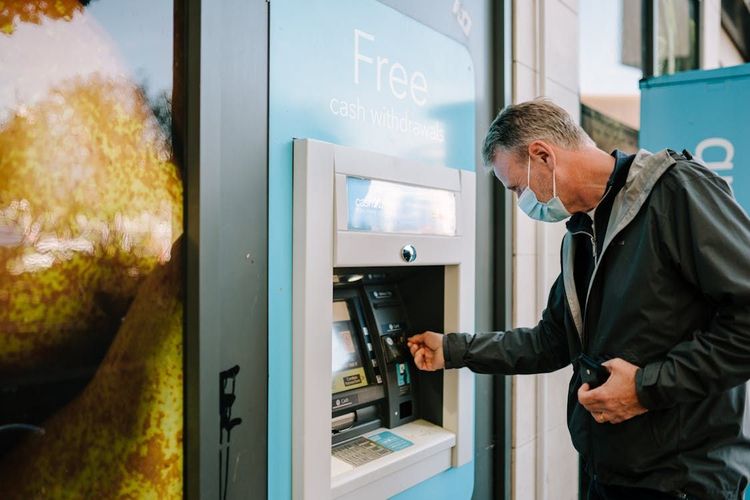
This is the most direct functional substitute for an ATM at most retail locations, and it costs essentially nothing to implement.
You enable cashback on your existing debit terminal (a configuration change, not a hardware purchase), set a maximum amount (typically $40–$200), and customers can request cash during any debit card purchase. There is no customer surcharge, no float requirement beyond your normal register cash, and no separate compliance burden beyond standard POS security.
The key difference from an ATM is discoverability. A machine is a visible beacon; cashback at checkout is invisible unless advertised. Cashtic addresses this: it is a real-time directory of stores offering cashback, organized as a searchable map. When a shopper nearby searches for fee-free cash access, enrolled stores appear alongside ATM listings—without the machine, the float, or the compliance overhead. The average ATM surcharge in 2024 was $3.19, with total out-of-network costs averaging $4.77,2 making a free cashback service a meaningful, visible differentiator.
Best for: Most convenience stores, gas stations, small grocers, pharmacies, and liquor stores.
2. Bank or credit union ATM placement
Some financial institutions will place their own ATM on your premises at no cost to you—or pay a modest location fee—in exchange for floor space and a dedicated power circuit. The machine is the institution's property; they handle installation, cash loading, maintenance, and regulatory compliance. You receive a customer service amenity with none of the operational burden.
The trade-off: you receive no surcharge revenue (it flows to the institution), and you have no control over the machine's uptime, branding, or screen messaging.
How to pursue it: contact the commercial or business banking departments of regional credit unions and community banks. Larger national banks (Chase, Wells Fargo, Bank of America) tend to apply stricter placement criteria and favor anchor-tenant or transit-adjacent locations.
Best for: Stores in areas with active credit union networks, or where lease terms or landlord restrictions prevent owning equipment.
3. ISO revenue-share ATM placement
Independent Sales Organizations (ISOs) specialize in ATM deployment. An ISO places and owns a machine in your store at no upfront cost to you, handles all maintenance and cash logistics, and pays you a share of each surcharge transaction—typically $0.25–$1.00 per transaction, depending on volume commitments and negotiated terms.
Industry data from ATM Marketplace indicates a busy convenience store ATM generates approximately $984/month in ancillary income for the location owner under a full-ownership model;10 under an ISO revenue-share arrangement, the location fee is a fraction of that, but so is your risk and effort.
Contract terms to examine carefully: exclusivity clauses that may prevent you from offering cashback or working with other cash-access providers; term length (3–5 years is common); and early termination penalties.
Best for: Stores that want a physical ATM presence without any capital commitment, and are willing to accept a small per-transaction location fee in lieu of full revenue.
Before you sign: an ISO contract checklist
ISO placement removes the upfront cost, but the contract is where the real trade-offs live. Ask for these in writing before signing:
- Surcharge control: Who sets the withdrawal fee — you or the ISO? If the ISO sets it, confirm the amount and whether you can veto increases.
- Revenue split and payment schedule: Get the exact per-transaction rate ($0.25–$1.00 is typical) in writing, plus how and when you're paid — monthly statement credit vs. direct deposit, and any minimum-volume clauses that reduce your cut.
- Exclusivity clauses: Many ISO contracts prohibit hosting a second ATM or, in some cases, offering competing cash-access services (including cashback at checkout) for the contract term. Read this clause specifically before assuming you can layer in other options later.
- Term length and early termination: 3–5 years is standard. Ask what the buyout or penalty is if you close, relocate, or want out early — this number is often buried in an appendix.
- Who's liable for what: Confirm in writing who covers cash-in-machine loss, skimming fraud, and physical damage — the ISO typically owns the machine and the float, but liability language varies by contract. Don't assume it's covered by your general business insurance.
- Uptime and service response: A machine that's down doesn't earn you anything and reflects on your store. Ask for a stated maintenance SLA (e.g., "service within 24 hours of a fault report").
None of this is a reason to avoid ISO placement — it remains the lowest-effort way to add a physical ATM. It's a reason to read the contract, not the pitch.
4. Money services business partnership
If your customer base regularly needs cash access beyond typical cashback limits, a formal arrangement with a licensed money services business (MSB)—Western Union, MoneyGram, or a state-licensed check casher—operating within or adjacent to your store can fill that gap. Grocery stores and pharmacies have hosted these services in a store-within-a-store format for decades.
This model involves more coordination: licensing requirements vary by state, dedicated counter space or a booth, and trained staff or a subtenancy arrangement with the MSB operator. In exchange, it positions your location as a financial services hub, which increases average visit duration and cross-purchase rates.
Note: state money transmission licensing requirements vary significantly. Legal counsel familiar with your state's financial services regulations is advisable before pursuing this route.
Best for: Higher-volume locations serving underbanked communities, or stores near transit hubs where large cash withdrawals are common.
5. Expanding contactless and digital payment acceptance
This is less a direct cash-access substitute and more a demand-reduction strategy: as more transactions shift to contactless and digital wallets, the proportion of customers who need physical cash from your location decreases. Accepting Apple Pay, Google Pay, PayPal, and Venmo removes friction for the growing share of customers who prefer not to carry cash.
That said, the Federal Reserve's longitudinal data shows cash usage declined from 31% of consumer payments in 2016 to 16% in 2023—a significant drop, but not elimination.1 11 The same 2024 DCPC found more than 90% of consumers intend to continue using cash in the future. Digital payment acceptance complements, rather than replaces, a cash-access strategy.
Best for: All retailers, as a baseline addition to one of the above options.
Comparing the options
| Option | Upfront cost | Monthly overhead | Revenue to store | Operational effort |
|---|---|---|---|---|
| Cashback at checkout + Cashtic listing✓ Best for most stores | $0 | ~$0 | Indirect (foot traffic) | Very low |
| Bank / credit union ATM placement | $0 | $0 | None | Low |
| ISO revenue-share ATM | $0 | $0 | $25–$100/mo typical | Low |
| Money services business partner | Moderate | Low–moderate | Variable | Medium–high |
| Owned ATMreference point | $2,000–$12,000 | $225–$790+ | ~$200–$500+/mo at volume | High |
Recommendation for most small retailers
Start with cashback at checkout and a Cashtic listing. The implementation cost is zero, customers pay nothing, and once listed you become visible to cash-seeking shoppers in your area in the same way a physical ATM creates visibility—without the machine or the capital tied up in it.
If transaction volume justifies a physical machine but you don't want ownership risk, an ISO revenue-share arrangement adds the machine with no upfront exposure. If your community has a high cash-access need, a bank placement or MSB partnership builds toward a more comprehensive financial services offering.
Cash use in the US is declining, but it is not disappearing. The Federal Reserve's own consumer payment research shows it remains embedded in roughly one in six transactions and in the intentions of the overwhelming majority of consumers.1 The question for retailers is not whether to serve that need, but how to do so cost-effectively.
References
- Federal Reserve Financial Services. 2024 Findings from the Diary of Consumer Payment Choice. Federal Reserve Financial Services, 2024. https://www.frbservices.org/news/research/2024-findings-from-the-diary-of-consumer-payment-choice
- Goldberg, Matthew. Bankrate's 2024 Checking Account and ATM Fee Survey. Bankrate, 2024. https://www.bankrate.com/banking/checking/checking-account-survey-2024/
- ATM Marketplace Staff. Are ATMs Still a Profitable Business? ATM Marketplace. https://www.atmmarketplace.com/blogs/are-atms-still-a-profitable-business/
- CStore Decisions Staff. ATMs Generate Returns. CStore Decisions, June 2016. https://cstoredecisions.com/2016/06/29/atms-generate-returns/
- Federal Reserve Bank of Boston. The 2016 Diary of Consumer Payment Choice. Boston Fed Research Data Report, 2017. https://www.bostonfed.org/publications/research-data-report/2017/the-2016-diary-of-consumer-payment-choice.aspx