How to Get Cash Without an ATM: 5 Alternatives That Save You Money
You need cash. The nearest ATM is two kilometres away, it charges a $4 fee, and the queue is six people deep. Sound familiar? There is a better way — and it doesn't involve a machine at all.
Why people are looking for ATM alternatives
ATM fees have never been higher. According to Bankrate's most recent survey, the average out-of-network ATM fee in the United States has reached an all-time high of $4.77 per withdrawal. In major cities, it can top $6. Pay that twice a week and you're handing over $500 a year just to access your own money.
Beyond cost, ATMs fail. They run out of cash on weekends, they go offline, and in many parts of the world they simply don't exist. Travellers, expats, and anyone in a rural area knows this problem well.
5 ways to get cash without an ATM
1. Peer-to-peer cash exchange (the fastest option)
Apps like Cashtic connect you directly with people nearby who are willing to hand over cash in exchange for a digital payment. You open the app, find someone with cash in your area, agree on an amount, and meet. No machine, no bank, no queue. The person providing the cash typically charges a small commission — far less than an ATM fee — and the transaction takes minutes.
This works especially well in areas with poor ATM coverage: rural towns, tourist destinations during busy periods, and developing countries where formal banking infrastructure is thin.
2. Cashback at a store
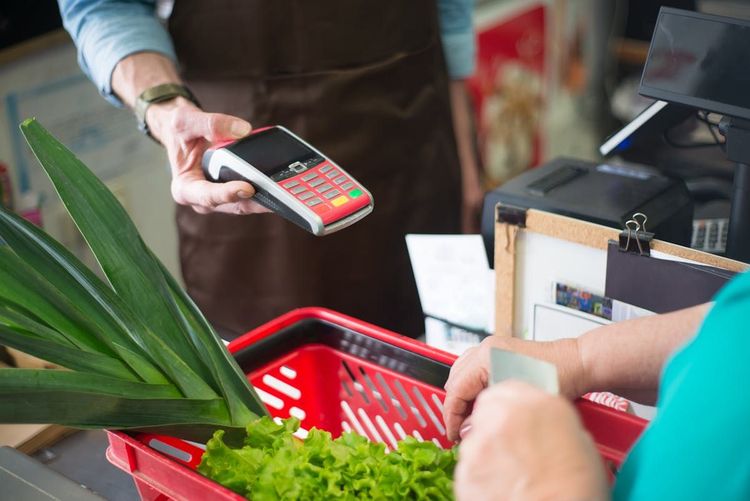
Many supermarkets, convenience stores, pharmacies, and petrol stations will add cash to your debit card transaction at the register. You buy something small — a bottle of water, a pack of gum — and ask for cash back. Limits vary: some stores go up to $200.
The catch: some chains now charge a fee (Dollar General charges up to $4.50, for example). Always ask before you commit. And not every country has widespread cashback at retail — it's common in the US and UK but rare in much of Asia and Latin America.
3. Bank branch over-the-counter withdrawal
If you have time and your bank has a nearby branch, a teller withdrawal avoids the ATM entirely. You can often withdraw larger amounts than an ATM permits and there is usually no fee. The downside is opening hours — branches close, ATMs don't.
4. Western Union or MoneyGram cash pickup
These services are normally associated with international transfers, but you can also send money to yourself and collect it as cash at an agent location. Useful in countries where your foreign card attracts high fees or simply doesn't work. Fees apply, but for larger amounts they can be competitive.
5. Ask someone you trust (and pay them back digitally)
The oldest solution: borrow from a friend, colleague, or family member and repay via a bank transfer or payment app. No fees, immediate, works anywhere. The obvious limitation is that you need a willing person nearby and a reliable way to repay them.
Which option is fastest?
For genuine emergencies — you need cash right now, in the next 20 minutes — peer-to-peer cash exchange is often the fastest option if providers are available in your area. Store cashback is close behind, but you need to be at or near a participating retailer during opening hours.
Which option is cheapest?
P2P exchange commissions typically run 1–3%. On a $100 withdrawal that's $1–3. Compare that to a $4–6 ATM fee. For amounts above $50, P2P is almost always cheaper. For very small amounts (under $20), store cashback with no fee is hard to beat.
Getting Cash Abroad Without ATM Fees
This is where the difference matters most. When you use a foreign ATM, you typically face three separate charges simultaneously:
- Foreign transaction fee (1–3%): Your bank charges this on every non-domestic transaction. Some banks waive it (Revolut, Charles Schwab, Wise), most don't.
- ATM operator fee ($2–6 flat): The company that owns the machine — often a local bank or an independent operator like Euronet — charges its own fee, displayed on screen just before you confirm.
- Currency conversion spread (1–2%): If you allow the ATM to convert the currency for you (Dynamic Currency Conversion or DCC), the machine applies its own exchange rate, typically 3–5% worse than the interbank rate. Always choose to pay in the local currency.
On a $100 withdrawal, these three charges can total 8–12% of what you withdrew. On a two-week trip with five withdrawals, that's $40–60 in fees — enough for a good meal.
Fee-free card options
Cards from Revolut, Wise, Charles Schwab (US), and Starling (UK) reimburse or waive ATM fees abroad. Wise in particular uses the mid-market exchange rate with a transparent low fee. If you travel frequently, one of these cards should be in your wallet. The limitation: you still depend on ATM availability and reliability, and machines in some countries charge their own flat fee regardless of your card.
Peer-to-peer cash exchange abroad
Cashtic connects you with locals who have cash and are willing to exchange it for a digital payment. You send them money from your card or bank app, they hand you the equivalent in local currency. One commission — typically 1–3% — and no bank fees on top. This is particularly useful in tourist destinations where ATM fees are high (Thailand, Indonesia, Morocco, Mexico, Costa Rica), in locations with unreliable ATM infrastructure such as smaller cities, islands, and rural areas, and in countries where your card simply doesn't work at local ATMs.
Practical tips when you must use a foreign ATM
- Always choose local currency when the ATM asks whether to charge in local or your home currency. Local currency means your bank converts — almost always a better rate.
- Withdraw larger amounts less often to minimise the number of flat fees you pay.
- Avoid airport ATMs — they are almost always the most expensive option, operated by independent companies with the highest fees.
- Use bank-branded ATMs over independent ones (Euronet, Travelex, etc.) where possible. Independent operators have higher fees and are more likely to push DCC.
Country-by-country ATM fee reference
| Country | Typical ATM fee (foreign card) | Cashtic coverage |
|---|---|---|
| Thailand | ~$6 flat | Growing |
| Indonesia | ~$3 flat | Available in major cities |
| Morocco | ~$2–3 | Available |
| Mexico | $2–4 | Available |
| Costa Rica | $3–5 (+ DCC risk) | Available in tourist areas |
| Kenya | KES 50–300 (~$0.40–2.30) | Available in Nairobi |
| India | Often free at some banks; $1–2 at others | Available in major cities |
| Jordan | JOD 1–2 (~$1.40–2.80) | Available |
The bottom line
ATMs are a convenience, not a necessity. Between store cashback, P2P cash exchange, and bank branches, you have multiple ways to access physical money without paying over the odds or hunting for a machine. For travel, the smartest approach is layered: carry a fee-free card for in-network ATMs, use Cashtic when ATM fees or reliability are poor, and pre-load some local currency for destinations where you know you'll need it on arrival. Between these three, you can eliminate 90% of foreign ATM fees without much effort.
Cashtic is available free on Android and iOS. Open the map, find a local cash provider, and skip the ATM entirely.
Find cash providers near you: Browse Cashtic by country — see the map, local providers, and ATM counts in your city.