ATM Alternative for Small Business in Australia: How Cashback Earns You Money
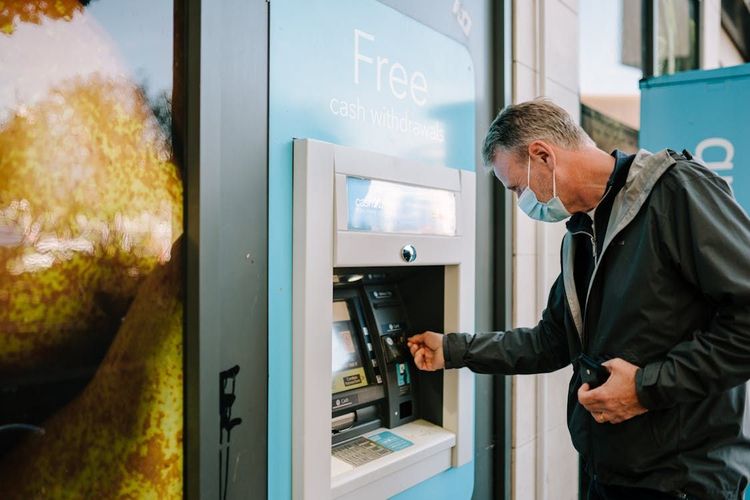
Every week, Australian store owners ask whether they should install an ATM. The logic seems sound: customers need cash, you have a register full of it, and surcharge revenue sounds appealing. But once you run the real numbers — hardware, cash loading, maintenance, armoured carrier, PCI compliance — the economics rarely work for small retail.
There's a better answer. And it actually pays you per transaction instead of costing you.
What an ATM actually costs an Australian retailer
Let's be specific. A new freestanding ATM unit in Australia runs $3,000–$8,000 AUD. Then add:
- Cash loading: You need to keep $5,000–$15,000 in the machine at all times. That's capital sitting idle in a box.
- Armoured carrier (for most suburban stores): $120–$400/month.
- Maintenance contract: $40–$120/month.
- Processing fees: 1–3% of transaction value to the network.
- Insurance rider: $25–$70/month.
At a typical suburban convenience store, you'll see 80–200 ATM transactions per month. At a $2.50 surcharge and roughly $1.80 net after fees, that's $144–$360/month revenue — against $300–$600/month in operating costs. Most stores lose money on their ATM. The ones that break even are in extremely high-traffic locations like petrol stations on highways or bottle shops near events.
The cashback alternative: you keep a commission
Cashback at checkout works like this: a customer pays by EFTPOS, requests cashback as part of the transaction, and you hand over the equivalent in notes from your register. Your POS settles the full amount electronically. You've effectively recycled cash that was already sitting in your till.
No new hardware. No cash float beyond your normal register float. No armoured carrier.
On Cashtic, listed businesses earn a commission on every cashback transaction — typically 0.5–2% of the amount dispensed, set by the store. Ten customers a day requesting $50 average, at 2% commission, is $10/day or $300/month of pure additional revenue. With zero additional cost.
Side-by-side comparison
| In-store ATM | Cashback via Cashtic | |
|---|---|---|
| Upfront cost | $3,000 – $8,000 AUD | $0 |
| Monthly operating cost | $300 – $600 AUD | $1/month (listing fee) |
| Cash float required | $5,000 – $15,000 | Normal register float |
| Revenue model | Surcharge (you pay network fees) | Commission (you set the rate) |
| Compliance burden | PCI DSS + ongoing audits | Standard EFTPOS compliance |
| Discoverability | Physical signage only | Listed in Cashtic app + Google |
The discoverability advantage
This is the part most retailers underestimate. When an ATM runs dry or charges fees people resent, they pull out their phone and search "cashback near me" or "stores giving cashback Sydney." If your store isn't indexed somewhere for that query, you don't exist to that person.
Cashtic is a real-time cashback-finder app. When you list your store, you appear on the map with your cashback limit, commission rate, and hours. The customer navigates to you, you hand over cash, earn your commission, and they become a foot-traffic conversion you'd never have had otherwise.
Sydney: the opportunity for city store owners
Sydney has thousands of independent retailers — bottle shops, convenience stores, IGA supermarkets, newsagencies, pharmacies — all of them sitting on a competitive advantage most haven't switched on yet.
Australia's big-four banks have been closing branches and ATMs aggressively. The RBA's Consumer Payments Survey shows ATM withdrawals down 60% from their 2008 peak — but cash in circulation is still growing. The mismatch: people use cash less often, but when they need it, they really need it. That last-minute cash demand is increasingly underserved, especially outside the CBD.
In inner-west, northern beaches, and outer suburban Sydney precincts, the nearest fee-free ATM is often a 10–15 minute detour. A local store that offers cashback on EFTPOS purchases is not just convenient — it's genuinely the only frictionless option in the area.
The demand translates into real commission income. A bottle shop in Newtown doing 15 cashback transactions a day at $60 average and 2% commission earns $540/month in commission alone — plus whatever those customers buy while they're in the store. The listing costs $1/month.
Common commission rates for Sydney stores:
- 0% commission — used by stores that want to attract foot traffic without any barrier; the transaction value is the draw.
- 1–2% commission — the most common range; at $50 average cashback, that's $0.50–$1.00 per transaction.
- 3–5% commission — viable in low-competition areas or for large cashback amounts.
In practice, the highest-value Cashtic stores in Sydney are:
- Bottle shops and BWS independents — high-traffic, evening peaks when ATM demand spikes.
- Independent supermarkets (IGA, FoodWorks) — existing cashback infrastructure, high basket sizes.
- Newsagencies and convenience stores — frequent, low-basket visits that become more valuable with cashback commissions.
- Service stations — often in areas with no nearby ATM; captive demand.
- Pharmacies — trusted, high foot traffic, and already trusted with money.
When you list on Cashtic, you appear in Google results for local cashback queries — "cashback near [suburb]", "stores that give cashback Sydney" — turning every urgent cash need within a few kilometres into a potential walk-in. Many of those walk-ins buy something else while they're in your store, making each cashback visit a net-positive transaction before the commission is even counted.
Who should still consider an ATM?
High-foot-traffic locations where customers want an ATM experience specifically — a large petrol station on a highway, a hotel lobby, an entertainment precinct — can still make ATM economics work. If you're doing 500+ transactions a month, the surcharge revenue starts justifying the overhead.
For everyone else — suburban bottle shops, IGA-style supermarkets, pharmacies, newsagents, takeaway shops — cashback at checkout is a strictly better deal. Lower cost, simpler operation, and you earn per transaction rather than hoping to recoup a capital investment.
Getting started takes 2 minutes
Sign in at cashtic.com/for-businesses, download the Cashtic app, and enter your store name, address, cashback limit, and hours. Your listing goes live on the map immediately. No hardware. No contracts. Cancel any time.