Dollar Tree & Dollar General Cash Back: Fees, Limits & Free Alternatives
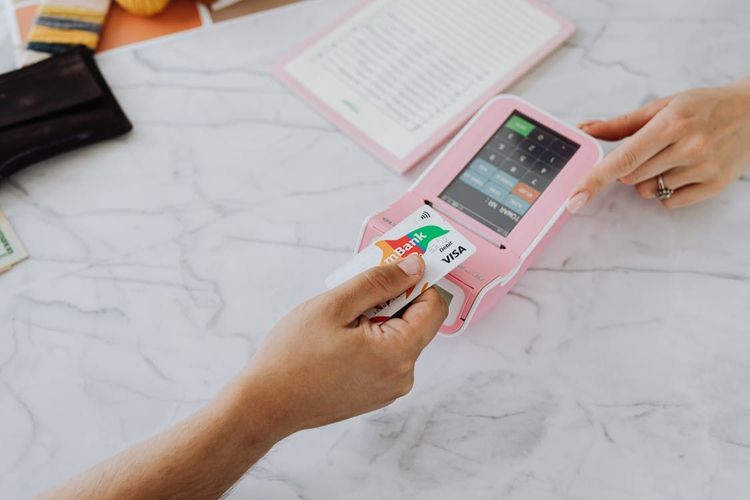
When you pay by debit card and ask for cash back at the register, most major US retailers hand it over for free. A handful don't. And the gap between the two groups isn't an accident.
According to a 2024 report from the Consumer Financial Protection Bureau, three retail chains u2014 Dollar General, Dollar Tree Inc. (which operates both Dollar Tree and Family Dollar), and Kroger Co. u2014 collectively charge an estimated $90 million per year in cash back fees. The actual cost to the retailer of processing that same transaction: $0.05 to $0.19.1
For a full breakdown of which stores charge, how much, and the free alternatives, see our complete cash back store comparison. This post focuses on the harder question: why the fees exist, who pays them, and what the economics actually look like.
The merchant economics: cents vs. dollars
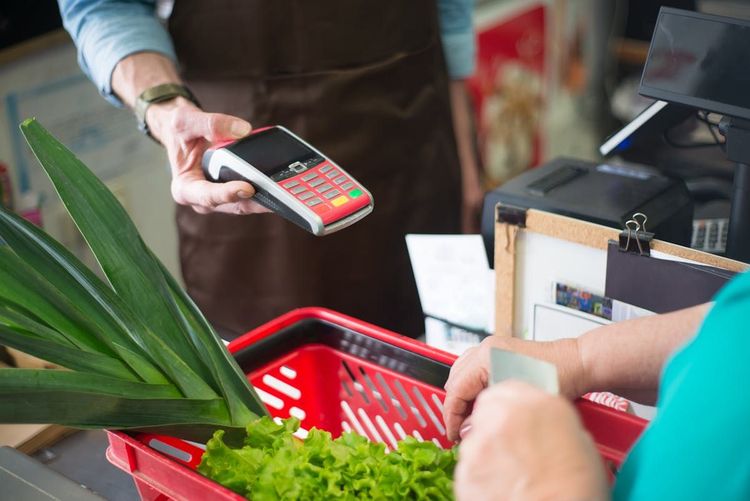
Cash back at checkout works like this: you make a purchase, the retailer accepts your debit payment, and hands you physical cash from the register in return. From the store's perspective, they have received electronic funds and returned cash they were already holding. The marginal cost u2014 the interchange fees and processing overhead u2014 runs $0.05 to $0.19 per transaction for a typical $10u2013$40 withdrawal.
Dollar General charges $1.00u2013$2.50 for the same transaction. At $2.50 on a $20 withdrawal, that is a 12.5% surcharge on the cash accessed u2014 and the fee is the same whether you take $10 or $40. The CFPB report estimates Dollar General's cash back fee revenue alone approaches $90 million annually across its 20,000+ locations. The fee is not recovering a cost. It is a revenue line.
Kroger's fee structure is more nuanced u2014 $0.50 for amounts up to $100, $3.50 for amounts above u2014 and Kroger Plus cardholders may be exempt at some locations. But the principle is the same: Walmart, CVS, Walgreens, Target, and Albertsons, all operating at comparable or larger scale, have chosen not to charge. The fee is a policy choice, not an economic necessity.
Who pays the most
Dollar stores don't locate randomly. The CFPB report documents that Dollar General and Dollar Tree Inc. deliberately concentrate their footprints in rural towns, low-income communities, and communities of color. 80% of Dollar General's stores are in towns with fewer than 20,000 residents. Rural communities are ten times more likely to meet the definition of a banking desert u2014 an area with no bank branch within 10 miles.1
From 2018 to 2021, nearly half of all new US retail location openings were dollar stores. Research has associated dollar store openings with the subsequent closure of nearby local grocery retailers, further concentrating market power in communities with limited alternatives.
The median cash back withdrawal at retail is just $20, according to Federal Reserve data cited in the CFPB report.1 A $1.50 fee on a $20 withdrawal is a 7.5% surcharge. For comparison: the average out-of-network ATM costs $4.77 in combined fees, but the median ATM withdrawal is $100 u2014 a 4.8% effective rate. On a per-dollar-accessed basis, dollar store cash back fees are more expensive than an ATM for the customers least able to afford it.
How cash back at checkout actually works
Understanding why the fee is so egregious requires understanding how the transaction works. When you pay by debit and request cash back, the store adds the cash amount to your purchase total. You pay once; the cashier hands you bills from the till. Your bank sees a single debit u2014 no different from any other purchase.
This is fundamentally different from an ATM withdrawal. An ATM is a separate machine dispensing cash for a service fee. Cash back is woven into a purchase transaction already happening. The store is not providing a banking service u2014 it is returning physical cash in exchange for electronic funds it has already received. The cost is cents. Whether the store charges for it is entirely a choice.
What this means if you own a store
The data cuts both ways. The fact that Walmart, CVS, Walgreens, Target, and Albertsons all offer cash back for free u2014 at scale u2014 shows the fee is not structurally necessary. It is a margin decision.
A store that offers fee-free cash back and makes it visible competes differently in a market where shoppers increasingly check before they walk in. Services like Cashtic surface fee structures alongside store locations, so customers know in advance which nearby option is free. The impulse purchase that follows a cash back visit u2014 NACS puts the average at $4u2013$7 u2014 goes to whichever store earned the visit.3
Cashtic businesses set their own rates during onboarding. Across 60 active businesses on the platform, the average commission is 2.5%. Most charge nothing or a minimal percentage u2014 positioning themselves as a genuinely cheaper alternative to the nearest ATM, with the total cost visible to the user before they agree to the transaction.
Finding free cash back near you
Fee-free options exist in most US markets u2014 the challenge is knowing which stores offer it before you get there. The Cashtic cash back map shows nearby stores, their current limits, and whether they charge a fee in real time. The full store comparison lists every major chain with limits, fees, and payment requirements side by side.
The short answer for avoiding fees: any Walmart, Target, Walgreens, CVS, ALDI, or Albertsons near you will do it for free. Dollar General, Dollar Tree, Family Dollar, and Kroger-family stores will charge. Now you know why.
1 Consumer Financial Protection Bureau. Issue Spotlight: Cash-Back Fees. CFPB, 2024.
2 Goldberg, Matthew. Bankrate's 2024 Checking Account and ATM Fee Survey. Bankrate, 2024.
3 NACS Magazine. Understanding Impulse Buys. May 2023.
Find Free Cash Back Near You
If you're tired of paying fees to access your own money, there's a better option. Cash back near me: how to find free cash at checkout maps out exactly which stores near you offer fee-free cash back — and introduces peer-to-peer cash exchange as a fast, no-fee alternative when no store is convenient. For grocery store-specific limits and policies, see do grocery stores give cash back?
Looking for cash-accepting stores or ATMs near you right now? Find cash back stores and ATMs in your city →