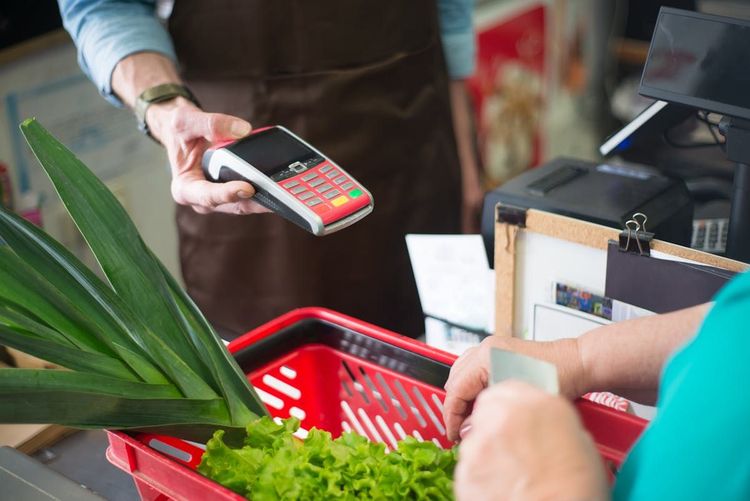
Cashback at Checkout for Businesses: How a P2P Network Beats Traditional POS Terminals

When businesses search "cashback at checkout," Google's AI Overview correctly identifies three distinct models. The confusion is that each one solves a different problem — and the wrong choice costs you time, money, or both. This is a decision guide, not a how-to: each model links out to a dedicated setup article where appropriate.
The three models at a glance
| Model | What it is | Who it's for |
|---|---|---|
| Terminal-based cash withdrawal | Customer requests cash during a debit transaction at your POS terminal. You hand cash from the register. | Retailers with existing compatible POS hardware and PIN debit processing enabled. |
| Digital cashback rewards | Customers earn a percentage of spend back into a loyalty wallet. No physical cash involved. | Ecommerce and online-first businesses focused on repeat purchase and retention. |
| Peer-to-peer cash network (Cashtic) | Your business appears on a map as a cash access point. Customers exchange digital payments for register cash — you earn a fee. | Independent retailers, cafés, and any business without compatible terminal hardware or that wants map discoverability. |
Model 1: Terminal-based cash withdrawal at POS
This is the classic PAYONE/Verifone model. The customer selects "cash back" at your terminal during a PIN debit transaction, adds a cash amount to their purchase, and you hand over cash from the register. The transaction settles as a single debit — no separate cash-advance process.
The constraint: it requires a compatible payment terminal with cashback enabled through your acquirer, and it only works when the customer is already making a purchase at your store. Customers can't come in specifically for the cash — which limits the foot traffic benefit.
For the complete setup process, see How to Offer Cashback at Your Store.
Model 2: Digital cashback rewards programs
Platforms like Shopback, Rakuten, or in-house loyalty schemes give customers a percentage of spend back as a virtual wallet credit. This is a marketing instrument, not physical cash access — the "cashback" is a discount on future purchases.
These programs require integration with your ecommerce or loyalty platform and are most effective for online-first businesses trying to drive repeat purchases. If your goal is cash access for in-store customers, this model doesn't address that need.
Model 3: Peer-to-peer cash network (Cashtic)
Cashtic takes the POS cashback concept and removes its two constraints: the hardware requirement and the "purchase required" rule.
When your business is listed on Cashtic:
- You appear on the Cashtic map — discoverable to anyone nearby who needs cash, whether or not they intended to visit your store.
- Customers can come specifically for the cash, creating the same foot traffic dynamic as an ATM. Research shows 62% make an additional purchase during the visit.
- You exchange register cash for a digital payment and earn a small service fee — turning a cost (cash management) into a revenue line.
- No terminal upgrade needed. Setup takes under an hour via the Cashtic app.
Comparing the models on what actually matters
| Factor | Terminal (POS) | Digital rewards | Cashtic P2P |
|---|---|---|---|
| Hardware required | Yes — compatible terminal | No (online integration) | No — smartphone only |
| Setup time | Days to weeks | Days to weeks | Under 1 hour |
| Customer must be buying? | Yes | Yes | No |
| Map discoverability | None | None (unless platform lists you) | Yes — Cashtic map |
| Revenue model | Cost (acquirer fees) | Cost (platform fees) | Earn per exchange |
| Reduces bank deposits? | Partially | No | Yes |
| Works without a sale? | No | No | Yes |
Which model fits your business?
| Your situation | Best model |
|---|---|
| Large retailer with existing POS infrastructure and high transaction volume | Terminal-based — feature is already within reach, integrates with existing checkout flow |
| Independent shop, café, convenience store, or market trader | Cashtic P2P — no hardware cost, earn fees, gain map visibility, reduce bank deposits |
| Ecommerce or subscription business | Digital rewards — no physical cash involved; focus on retention and LTV |
| Rural or banking-desert location with high unmet cash demand | Cashtic P2P — highest exchange volume potential, fills genuine community need |
| Business that wants both | Terminal-based for customers already at checkout + Cashtic for map discoverability |
Pros and cons for independent retailers
Before committing to any model, it helps to have the trade-offs in plain terms. The following applies primarily to register-based cashback (Models 1 and 3).
The pros
"Customers who used in-store financial services — including register cashback — spent on average 22% more per visit than those who came only for product purchases."
- Direct commission income: Unlike loyalty programs where you fund rewards from your margin, register cashback generates income. You set the rate, and every transaction pays it. At 3% on $80 cashback, you earn $2.40 — pure profit on the exchange.
- Incremental foot traffic: Customers who need cash urgently will visit specifically because you offer cashback. Each one also makes a qualifying purchase — converting what would have been an ATM stop into a retail transaction.
- No hardware cost: Debit cashback is supported by Visa and Mastercard through most major card processors. Nothing changes at your POS for terminal-based cashback. Cashtic requires only a smartphone.
- Better float management: Cashback moves accumulated electronic funds back into physical notes. For stores running frequent bank runs to replenish cash, cashback customers can meaningfully reduce that burden.
- Low chargeback risk: Cashback transactions are PIN-protected and in-person. Chargeback rates on debit cashback are extremely low compared to card-not-present transactions.
The cons
- Till float management: Cash physically leaves your drawer with each transaction. While card settlement covers it by the next day, a busy shift can leave your till short on notes. Plan for a larger float or set a daily dispense limit.
- Processing fees on the full amount: Your merchant services provider charges interchange on the entire transaction — purchase plus cashback. At typical debit rates (0.05%–0.5% per the CFPB's 2024 interchange analysis), this reduces your net commission slightly. At 3% commission and 0.2% interchange, your net is approximately 2.8%.
- Volume depends on local demand: In areas with many free ATMs, customers have a cheaper alternative. The business case is strongest where ATM access is limited, fees are high, or customers discover you through a cashback finder like Cashtic.
- Requires staff awareness: Unlike ATMs, cashback at the register requires a staff member for each transaction. During busy periods, this can slow service. Clear training and limits help.
The business case in one paragraph
Whichever model you choose, the underlying opportunity is the same: bank branches in the US declined by over 9,000 between 2017 and 2024, and out-of-network ATM fees averaged $4.77 in 2024 (Bankrate). Customers are actively seeking free cash access. A business that provides it — through any of the three models above — becomes a destination rather than just a store. The question is which model gets you there fastest, at lowest cost, with the best return.
Ready to list your store as a cashback destination?
Set your own rate, appear on the map when locals search for cash nearby, no hardware needed.
Further reading
- How to Offer Cashback at Your Store — step-by-step terminal setup guide
- Does Cashback at Checkout Increase Sales? — the data on qualifying purchases and foot traffic
- ATM Alternatives for Small Retail Businesses — full comparison including ISO and bank placement